How Photo Editing Pricing Works (and How to Compare Services)
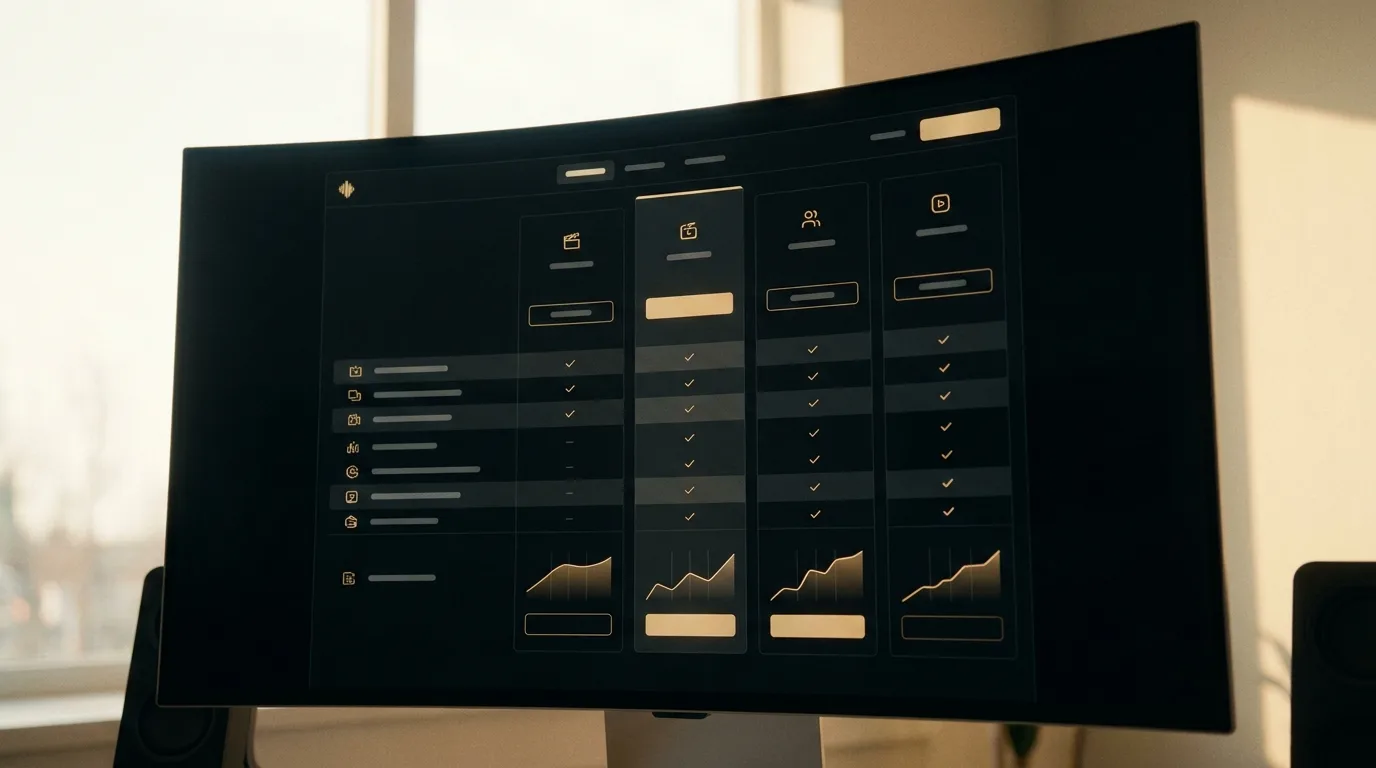
Editing quotes are hard to compare because services price different things and call them the same. One charges per image, one per gallery, one per hour — and none of them mean what you assume. Here is how each model actually works, and what to look at instead of the headline number.
The common pricing models
Per image
The most common for photo. You pay for each delivered image, sometimes with a separate rate for culling.
Watch for: whether the price is per delivered or per submitted image. Submitting 4,000 frames to receive 800 is a very different bill under each definition. Also ask whether retouching is included or billed separately — usually it is separate, and that is reasonable.
Per gallery or per event
A flat rate for a whole wedding, often banded by image count. Easier to budget and easier to quote your own clients against.
Watch for: where the bands break. A gallery of 810 images priced in the 800–1,200 band costs the same as one of 1,150.
Per hour
Usual for video and complex retouching, where the work does not divide into units.
Watch for: an estimate in writing before starting, and what happens if the job runs over.
Monthly retainer
A fixed volume per month at a reduced rate, with priority scheduling. Makes sense once your volume is steady.
Watch for: whether unused volume rolls over, and what overflow costs during peak season.
Why the cheapest is not the best value
The market has a wide spread, and the spread is not arbitrary. What separates the ends:
- Who does the work. A dedicated editor who learns your style versus a rotating pool. This is the single biggest driver of both price and consistency.
- Whether style matching is real. Applying your preset is not style matching. Reading a scene and deciding how you would have handled it is.
- Revision policy. Cheap services often have none, which means the fixing lands back on you — the exact thing you were paying to avoid.
- Turnaround guarantees, especially in the months when you actually need them.
- Human versus automated. AI-assisted editing is genuinely fast and genuinely cheap, and it is fine for consistent, well-lit work. It struggles with mixed light, unusual white balance and anything requiring judgment.
The trap is real: if a gallery comes back needing two hours of correction, a service that saved you money per image cost you more than the expensive one.
What to compare beyond price
Put every quote through the same questions and the comparison becomes possible:
- Is culling included, and how is it charged?
- Is basic retouching included? Blemishes, stray hairs, sensor dust.
- How many revision rounds, on what portion of the gallery?
- What is the turnaround, and what is it in October?
- Same editor every time, or whoever is free?
- Is there a free test edit? A service confident in its matching will offer one.
- How do files move, and is an NDA available?
- What happens if you are not satisfied? Get the answer before you need it.
The honest math
Do this calculation with your own numbers rather than accepting a generic claim.
Take the hours a gallery costs you today, end to end. Multiply by what an hour of your time is worth — your day rate divided by the hours a job really takes. Compare that against the editing quote.
For most working photographers the outsourcing cost lands well below their own hourly value, and that is before counting what you do with the recovered time. But run it yourself: if you shoot eight weddings a year and enjoy editing, the math may genuinely favour keeping it in house.
One more variable
Faster delivery has commercial value that rarely enters the calculation. A studio delivering in two weeks instead of eight gets referred more, gets reviewed sooner, and can book the next season earlier.
That is not a line item on any invoice, and it is often the largest return in the whole equation.
A note on AI-assisted editing
It has changed the low end of the market permanently, and pretending otherwise helps nobody. Automated tools apply your profile across a gallery in minutes for a fraction of human rates, and on evenly lit, consistent work the results are genuinely usable.
Where they still struggle is judgment: mixed lighting in a reception, a bride in white against a bright sky, a ceremony lit by tungsten and window light at once. These need someone to decide what the image should feel like, not just what is technically neutral.
The practical answer for most studios is not one or the other. It is automation for the straightforward portions and human editing where the decisions matter — and being clear with your provider about which is being applied to your work.
Frequently asked
- Per-image or subscription — which is better?
- Per-image is transparent and scales with your volume; subscription suits high steady volume. Choose based on how many weddings you shoot.
- Why is retouching priced separately?
- It's detailed, manual, per-image work — far more involved than batch color correction, so it's quoted on its own.
- How do I compare fairly?
- Look at cost per delivered, on-style image including your re-work time — not just the headline rate.