Wedding Video Editing Outsourcing: A Studio Owner's Guide
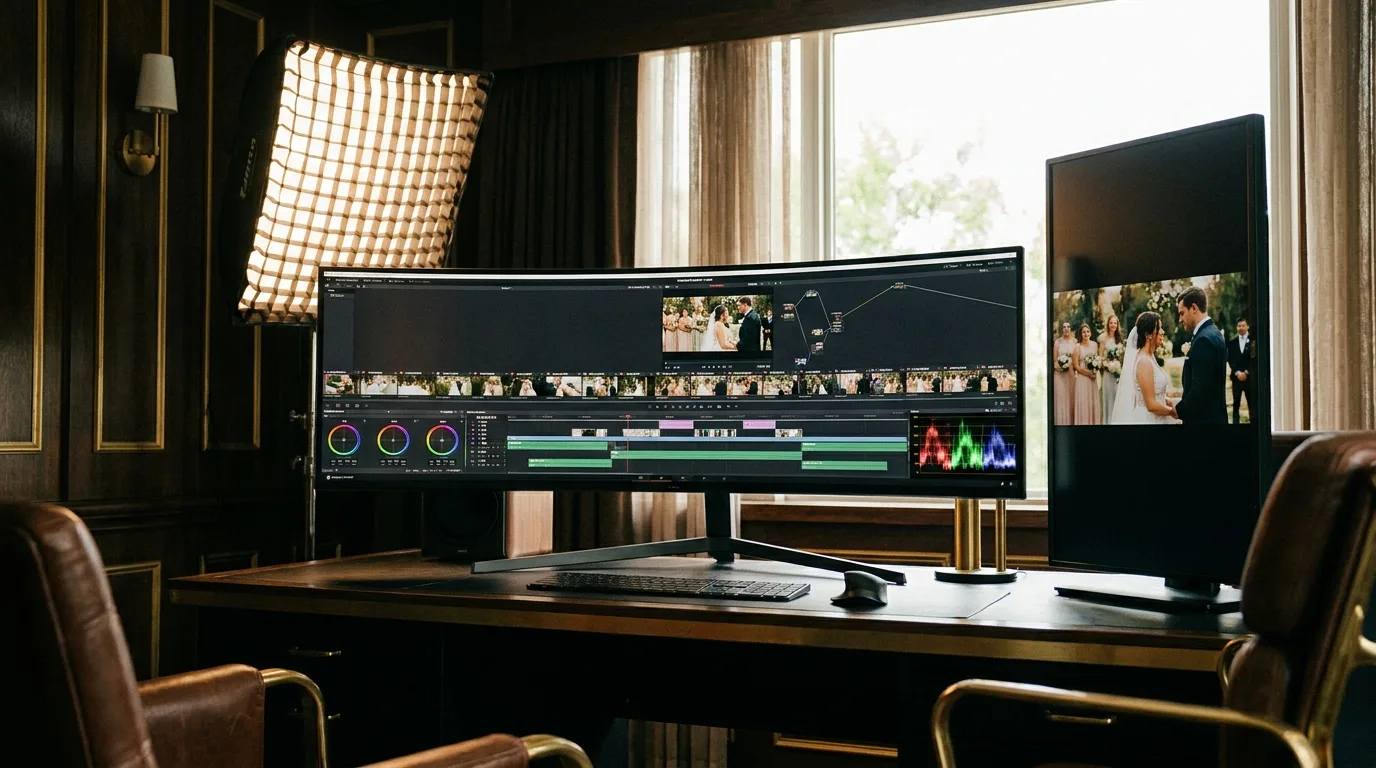
Video is where outsourcing pays off hardest. A wedding film takes 20 to 40 hours to edit — three to five times what a photo gallery takes — and most photo-first studios avoid selling video for exactly that reason. Handing off the edit turns video from a bottleneck into a margin line.
Why studios outsource video editing
- The hours are brutal. Ingest, sync, select, story structure, cut, colour, sound. A five-minute highlight film hides an enormous amount of work.
- It needs different skills. Pacing, narrative and sound design are not adjacent to photo editing. Being excellent at one says nothing about the other.
- It unlocks revenue. Studios that can offer film without absorbing the edit raise their average booking substantially.
- It fixes the backlog. Video is almost always the piece that delays delivery, and delayed delivery is what generates complaints.
- Most photo-only services do not touch it, which is precisely why it stays a bottleneck for so many studios.
How the workflow works
Video is heavier than photo, so the handoff needs a little more planning:
- You shoot and back up as usual, ideally with a consistent card and folder naming.
- You send proxies, not originals. Low-resolution copies that carry the same timecode. A wedding drops from 500 GB to something that uploads overnight.
- You send a brief: couple names, running order, which songs matter, any moment that must appear, target duration.
- The editor cuts on proxies and returns a first version for review.
- You give timestamped notes — «at 1:24, hold the vows two seconds longer» — rather than general impressions.
- Final conform and grade happen against the originals, either on your side or by shipping only the used clips.
Audio deserves its own mention. Send everything: lavalier tracks, recorder files, camera scratch audio. A film built on real vows lands differently than one built on music, and the editor cannot use what they do not receive.
Keeping your style
Style in video is more layered than in photo. Four things define it, and all four need documenting:
- Structure. Chronological, or built around the vows as spine? Does it open cold or with a title?
- Pace. Long contemplative shots, or tight cuts on beat? This is the most recognisable part of a studio's signature.
- Colour. Your LUTs plus notes on how far you push. Skin warmth, shadow density, how you handle greens.
- Sound. How much real audio versus music, whether ambience sits under the music, how you handle the transition into the party.
Give the editor three finished films of yours and a written note on each of those four points. That is the whole style guide, and it takes an hour to produce.
How to choose a video editor
- Watch complete films, not showreels. A reel proves they can cut three seconds. A five-minute film proves they can hold a story.
- Ask for a paid test on a short piece before committing a season.
- Check the colour work specifically. Ask to see log footage next to the graded result.
- Confirm turnaround and peak-season capacity.
- Ask about music licensing. A commercially licensed track can get your client's film muted or blocked; a good editor raises this before you do.
- Confirm software and version. Premiere, Resolve or Final Cut — round-tripping between them loses work.
What it does to your business
The interesting shift is not the hours saved. It is that video stops being the thing you dread.
Studios that outsource the edit start selling film confidently, because delivery no longer depends on finding a free week. They quote it as a standard option instead of an exception — and the average booking value moves accordingly.
The films also tend to get better, for an unglamorous reason: an editor who cuts weddings full time has simply cut more of them than a photographer who edits four a year.
What to send, in one list
- Proxy media with matching timecode
- All audio: lavaliers, recorders, camera scratch
- Running order of the day with rough timestamps
- Couple and family names, spelled correctly
- Songs that matter, and whether they are licensed
- Two or three of your finished films as reference
- Target duration and deliverable list — highlight, extended cut, vertical reel
Assemble that once as a template and the brief for every subsequent wedding takes ten minutes to fill in.
Frequently asked
- How do I send terabytes of footage?
- Usually via a proxy workflow or a secure transfer service. You don't ship your originals; the process is fast and non-destructive.
- Will it still feel like my work?
- Yes — your reference films and feedback are the brief. We match your pace, music and color before scaling.
- What's the typical turnaround?
- Often 48–96 hours for a highlight film, depending on length and complexity. Faster, consistent delivery is the whole point.