What to Look For in a Fine-Art Retouching Service
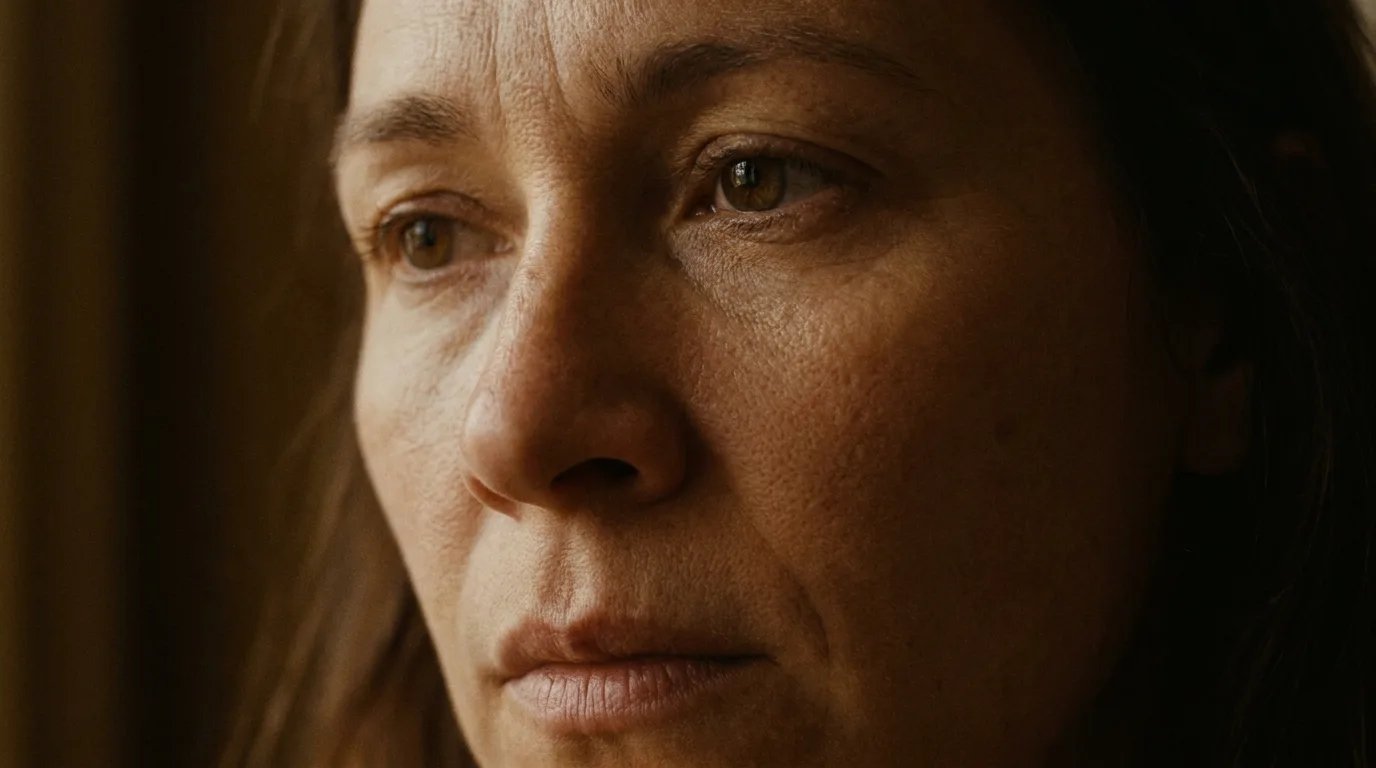
Retouching is the easiest place to ruin a photograph. The goal is not smooth skin — it is skin that still looks like skin, in a portrait that still looks like the person. Here is what separates a fine-art retoucher from someone running a smoothing slider, and how to evaluate one before you hand over your portfolio work.
1. Natural skin, always
Look at any test edit at 100%. Real skin has texture: pores, fine lines, the slight unevenness that makes a face read as human. A plastic result is instantly recognisable and impossible to un-see once a client notices it.
Good retouching uses frequency separation or dodge and burn to even out tone while keeping texture intact. It removes the temporary — a blemish, a stray hair, a shine — and leaves the permanent: the freckles, the smile lines, the character.
The test: zoom to 100% on a cheek and a forehead. If the texture is gone, walk away.
2. They understand light and dimension
This is what separates competent from excellent. A face is a three-dimensional object, and retouching that flattens it makes a portrait look like a mask.
Skilled dodge and burn work reinforces the light that was already there: it deepens the shadow along a jaw, lifts the highlight on a cheekbone, keeps the eye reading depth. Done well, you cannot point to what changed — the face just looks better lit.
The test: ask for a before and after of a portrait shot in flat light. Anyone can retouch a beautifully lit face; rescuing dimension from flat light takes skill.
3. Consistency across a set
One flawless image proves very little. A wedding album or an editorial spread needs twenty images that belong together.
Watch for skin tone drifting warmer or cooler between frames of the same person, retouching intensity varying from heavy to light, and eye brightening applied to some frames and not others. These inconsistencies are barely visible one at a time and glaring in a sequence.
The test: send five images of the same person in the same light and view the results side by side.
4. They match your aesthetic, not theirs
Retouchers develop preferences, and an unexamined preference becomes a signature imposed on your work. Some brighten every eye. Some slim every jaw by default. Some push contrast until the image is theirs, not yours.
A professional asks first: how far do you go on skin? Do you remove scars or keep them? Do you reshape anything, and only when the client asks? Where do you stand on stray hairs — clean silhouette, or leave the flyaways that feel natural?
The test: notice whether they ask those questions before starting. If they do not, they are applying a formula.
5. Clear turnaround and communication
Fine-art retouching is slow work — a properly retouched portrait can take 30 to 90 minutes. Anyone promising a hundred images overnight at high-end quality is describing something else.
What to establish up front: realistic turnaround, how many revision rounds are included, whether they work in layered PSD or flattened files, and whether they can deliver both a light version and a full version.
Questions worth asking
- Do you work with frequency separation, dodge and burn, or both — and when do you use each?
- Can I see a 100% crop of skin from a finished file?
- Do you deliver layered files so I can adjust intensity?
- How do you handle sensitive requests — scars, weight, features?
- What is your realistic turnaround for twenty portraits?
- Who does the work, and is it the same person every time?
The ethical part nobody discusses
Retouching a person is different from retouching a product, and it deserves a stated position.
Our default is to remove what is temporary and keep what is permanent. A pimple that will be gone next week goes; the birthmark someone has had their whole life stays unless they ask otherwise.
Reshaping a body or a face is a request, never an assumption. Making that decision for someone communicates that they needed changing — and no photograph should say that to the person in it.
How to run the evaluation
Send three images: one beautifully lit portrait, one in flat or difficult light, and one with visible skin texture you want preserved.
Those three reveal almost everything — whether they can hold texture, whether they can build dimension, and whether they respect what you asked for.
Frequently asked
- How much does fine-art retouching cost?
- It's priced per image and varies with complexity, since it's detailed manual work. Request a quote based on your typical needs.
- What's the difference vs. regular editing?
- Editing handles color and basic corrections at volume; fine-art retouching is meticulous, pixel-level work for hero and portfolio images.
- Can you match my retouching style?
- Yes — we build from your finished work and confirm with a sample before processing the full set.