How to Outsource Your Wedding Photo Editing (Without Losing Your Style)
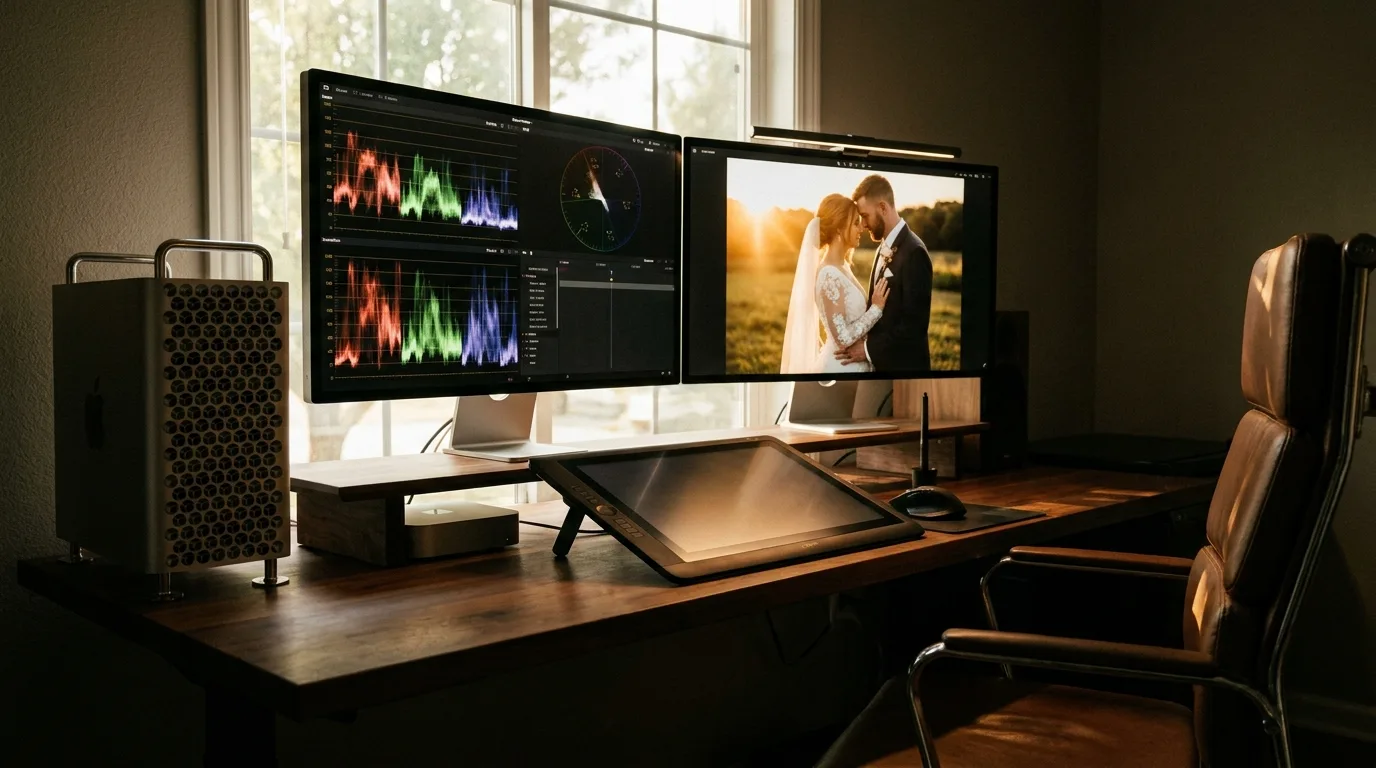
Outsourcing your wedding editing does not mean giving up your look. It means teaching someone your look well enough that nobody can tell. Done right, the galleries come back indistinguishable from your own work — and you get your evenings back. Done wrong, you spend more time fixing than you would have spent editing. Here is how to tell the difference before you commit.
Most photographers who try outsourcing and quit do so for the same reason: they sent a catalog, got something generic back, and concluded it does not work. Usually the problem was not the editor. It was that no style guide ever existed.
Start with your own consistency
Before anyone can match your style, your style has to be matchable. That means being honest about a question most of us avoid: would two galleries of yours from different months look like the same photographer shot them?
If the answer is no, fix that first. Pick ten to fifteen finished galleries you are genuinely proud of, look at them side by side, and write down what they have in common — how you handle skin, how deep your shadows go, whether your whites stay warm or clean, how you treat greens in open shade.
That document is worth more than any preset. Presets carry numbers; a style guide carries intent.
Build the reference set
What an editor actually needs from you:
- Your presets or profiles, with a note on which you reach for in which light.
- Twenty to thirty edited images covering your hardest situations: dark ceremony, harsh midday, tungsten reception, mixed light at the bar.
- A few before-and-after pairs so the editor can see the distance you travel from RAW.
- Your culling criteria. Do you keep the blink if the moment is great? Do you deliver duplicates? How many images per hour of coverage?
- Your crop and orientation rules, and whether you straighten aggressively or leave tilt when it serves the frame.
Edge cases teach more than easy frames. Anyone can match your look at golden hour; the test is the reception at ISO 6400.
Always start with a test edit
Never send a full wedding first. Send a set of thirty to fifty images — including the difficult ones — and judge the result on four things:
- Skin tone. Neutral and believable across different people and different light? This is where most services fail.
- Consistency within a scene. Do consecutive frames from the same moment match, or does exposure drift shot to shot?
- White balance intent. Did they follow your warmth, or default to technically correct and emotionally flat?
- Restraint. Did they over-edit? Crushed blacks and heavy clarity are easy to spot and hard to undo.
Give specific feedback, not adjectives. «Too warm» helps nobody. «Skin runs about 200K warm and the shadows are lifted more than I like» is actionable.
Send files the safe way
You do not need to ship original RAWs. Lightroom Smart Previews are lightweight DNGs that carry enough data for full editing — a wedding drops from 80 GB to a few gigabytes, uploads in minutes, and your originals never leave your drives.
The editor works on the previews and returns the catalog with the settings applied. You sync back to the originals and export. Nothing destructive happens on your side at any point.
If you handle client work under confidentiality, ask for an NDA. Any serious partner will have one ready.
What it actually buys you
Run the numbers on your own situation rather than trusting a generic promise. A typical wedding gallery takes most photographers between eight and fifteen hours to cull and edit. Multiply that by the weddings you shoot in a season.
Those hours become one of three things: more weddings booked, faster delivery for existing clients, or your life back. All three are worth more than the editing fee, but only you can say which one you need.
The second-order effect matters too. Photographers who outsource stop dreading busy season, and that shows up in how they shoot.
Set expectations that survive volume
- Agree turnaround in writing, and ask what happens during peak months.
- Define revisions. One round of adjustments on a percentage of the gallery is normal; unlimited revisions usually means nobody committed to the style guide.
- Ask who edits your work. A rotating pool of editors cannot hold a consistent style. A dedicated editor can.
- Start with one wedding, then two, then the season. Scale after trust, not before.
The part nobody warns you about
The first two or three galleries will need more of your attention than editing them yourself would have. That is not a failure — that is the style guide being calibrated against reality.
By the fourth or fifth, the corrections drop to almost nothing. Photographers who quit outsourcing almost always quit during that first stretch, right before it starts paying off.
Frequently asked
- Will my clients know the editing was outsourced?
- No. When your style is matched correctly, the edit is indistinguishable from your own — it simply frees your time.
- Is sending my catalog safe?
- Yes. Using Lightroom Smart Previews you send lightweight files, not your original RAWs, and a reputable partner offers an NDA.
- How much does outsourced editing cost?
- Pricing is usually per image and scales with volume. Request a quote based on your typical gallery size and the level of retouching you need.